

MOST READ
- interview with bar italia バー・イタリア、最新作の背景と来日公演への意気込みを語る
- interview with Kneecap (Mo Chara and Móglaí Bap) パーティも政治も生きるのに必要不可欠 | ニーキャップ、インタヴュー
- Masabumi Kikuchi ──ジャズ・ピアニスト、菊地雅章が残した幻のエレクトロニック・ミュージック『六大』がリイシュー
- HOLY Dystopian Party ──ディストピアでわたしたちは踊る……heykazma主催パーティにあっこゴリラ、諭吉佳作/men、Shökaらが出演
- Eris Drew - DJ-Kicks | エリス・ドリュー
- R.I.P. Steve Cropper 追悼:スティーヴ・クロッパー
- heykazmaの融解日記 Vol.3:≋師走≋ 今年の振り返り WAIFUの凄さ~次回開催するパーティについて˖ˎˊ˗
- ポピュラー文化がラディカルな思想と出会うとき──マーク・フィッシャーとイギリス現代思想入門
- Jay Electronica - A Written Testimony: Leaflets / A Written Testimony: Power at the Rate of My Dreams / A Written Testimony: Mars, the Inhabited Planet | ジェイ・エレクトロニカ
- Autechre ──オウテカの来日公演が決定、2026年2月に東京と大阪にて
- The Bug vs Ghost Dubs - Implosion | ザ・バグ、ゴースト・ダブズ
- DJ Narciso - Dentro De Mim | DJナルシゾ
- Geese - Getting Killed | ギース
- 発見の会60+1周年公演『復興期の精神ー近代篇』 - 2025年12月18日〜21日@上野ストアハウス
- Oklou - choke enough | オーケールー
- ele-king vol. 36 紙エレキング年末号、お詫びと刊行のお知らせ
- Columns なぜレディオヘッドはこんなにも音楽偏執狂を惹きつけるのか Radiohead, Hail to the Thief Live Recordings 2003-2009
- Columns 12月のジャズ Jazz in December 2025
- ele-king vol.36 特集:日本のシンガーソングライター、その新しい気配
- Barry Can’t Swim - Loner | バリー・キャント・スウィム
 DOMMUNE
Home > Interviews > interview with Kneecap (Mo Chara and Móglaí Bap) - パーティも政治も生きるのに必要不可欠
interview with Kneecap (Mo Chara and Móglaí Bap)
パーティも政治も生きるのに必要不可欠
──ニーキャップ、来日直前インタヴュー
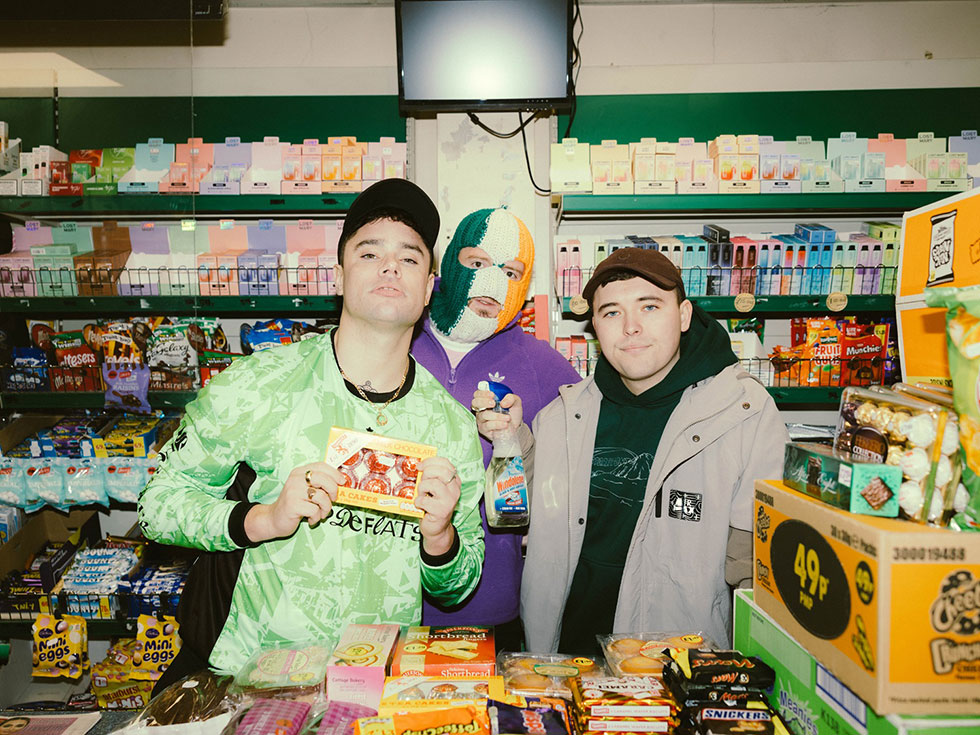
2025年、日本でも映画『KNEECAP/ニーキャップ』が公開され大きな注目を集めることとなったアイルランドのヒップホップ・グループ、ニーキャップ。2026年1月4日にrockin'on sonic@幕張メッセ国際展示場に出演、1月5日にはEXシアター六本木で単独公演を控える彼らの、じつに生き生きとした声をお届けしよう。(*See below for the English version)

政治において、言語は戦場であり法廷で争うための手段となる。その場に立つ全員が言葉の些細な言い回しを巡って議論する。そこで我々は弁護士となり、言葉の意味の違いを研ぎ澄ませて鋭利な刃物に変える兵士にもなる。その最たる現場がベルファストの政治だ。地理的にはアイルランドに位置しながら、一部はイギリスの統治下にあり、政治的・宗教的な背景によってカルチャーも分断されている。
モウグリ・バップとモ・カラのラッパーふたりとDJプロヴィからなるベルファストを拠点にするニーキャップの作品はそのような言語の宝庫であり、アイルランドの政治的風景を言葉とヴィジュアルの両方から色濃く反映している。DJプロヴィという(*「Provisional IRA(暫定IRA)」の略称から派生したスラング「Provei」が元ネタ)アーティスト名しかり、あるいはアイルランド国旗の3色の目出し帽もアイルランド共和派の武装組織IRAを示唆している。そもそもバンド名のニーキャップ自体が上記の関連団体によっておこなわれた悪名高い拷問を伴う制裁手段について言及している。つまり、あからさまに挑発している。しかし、このようなメッセージ性をライヴにおけるパーティのどんちゃん騒ぎ的なノリと合わせることによって、彼らはその背景にある恐怖や緊張感を緩和すると同時に、宗派の垣根を越えて若いファン層、とりわけ1998年の和平合意以降に育った若者が集える場を提供している。
とはいえ、彼ら自身はゴリゴリの共和主義者であり、アイルランド語で楽曲を制作し、イギリスによる北アイルランドの統治に対して公の場で激しく抗議している。さらに労働者階級であることに誇りを持ち、保守党の元首相マーガレット・サッチャーに対していまだに根深い嫌悪感を抱き続ける姿勢は、アイルランド国内だけでなくイギリスの左派系リスナーから圧倒的な支持を受けている(筆者もまたそのひとり)。さらにパレスチナへの支持も公言しており、それが原因でイギリスの首相キア・スターマー政権から糾弾され、同政権から反テロ法を盾にモ・カラがハマスを支持しているとの理由に(いまのところ、まったくの不毛な作戦とはいえ)法的に執拗な攻撃を受けている。
メディアや政治界などの権威からはニーキャップは無責任で無神経な危険分子のような描かれ方をしているのかもしれない。しかし、セルフ・タイトルにして彼ら自身が主演を務める映画『ニーキャップ』はときに寓話を交えながらフィクションという形で、彼ら自身が自らの目線で自らのストーリーを語る機会を提供している。さらにその特異な言語にフォーカスすることで、国家レベルから日常生活のレベルの両方から政治について多面的に映し出しながら、政治家やタブロイド紙が伝えるストーリーのカウンターとして、よりパンチとユーモアの効いた繊細な物語と同時に、いわゆる「トラブルズ」と呼ばれる北アイルランド紛争下のステレオタイプのイメージを覆す形でベルファストに暮らす人々の日常を描き出している。
今回、モウグリ・バップとモ・カラにビデオ通話によるインタヴューで、言語およびそこに含まる細部やニュアンスが、彼らの歌詞だけでなくアイデンティティや日常生活であり、そのすべてに関わる政治においてどのような中心的役割を担っているのかについて語ってもらった。
うちのライヴについて確実に言えるのは、ものすごい多様性があるってこと。全ジェンダーが勢揃いしてる。(モ・カラ)
いまではインターネットのおかげで、フランス語だのバスク語だのカタルーニャ語だの、ありとあらゆる言語の音楽にアクセスできるようになってる。いまはもっと実のある音楽が求められてる時代になってるんだろうね。(モウグリ・バップ)
■音楽を作って表現するというのは、ある種の空間なり環境を作り出してリスナーに提供するという側面もありますよね。ことライヴ・パフォーマンスでは大いにそれがあてはまると思うのですが、どのような空間を作り上げようとしていますか?
モウグリ・バップ:ニーキャップの使命のひとつとして、いまのメインストリームのラジオじゃ滅多に取り上げられることがない言語で語っていく、つまり、アイルランド語を中心にした自分たちのリアリティを反映した空間を作り上げようっていうのがあるんで。音楽を通して人びとがアイルランド語と繋がれる環境を作りたいわけさ。アイルランド語を自分自身のアイデンティティの一部として感じてもらいたい。これまでそういうことをやってる連中っていなかったんで。少なくともアイルランドのいまどきのヒップホップ・シーンにおいては。
モ・カラ:うちのライヴについて確実に言えるのは、ものすごい多様性があるってこと。全ジェンダーが勢揃いしてる。ヨーロッパというか、少なくともイギリスとアイルランドのヒップホップ・シーンってほぼ野郎に支配されてるじゃん。それがうちのバンドはカルチャー的側面も入ってきてるんでね。言語だったりとか、そこに伴うアイデンティティだったり、そこからも共感できる。毎回、ありとあらゆるジェンダーが集まってる。めっちゃエネルギーに溢れてるし、毎回モッシュピットが起きるし、モッシュするときは全員一緒、性別に関係なく、誰もケガしないようにお互いに気を遣いながら。誰にとってもめちゃくちゃ安全な場なんだよ。誰でも輪のなかに入ることができるし、そこに参加したいと願う全員にとってのオーガナイズされたカオスって感じ。
■ライヴ映像を見る限りモッシュピットがライヴで重要な位置を占めているように思いますが、そこには何らかの意図があるんでしょうか。実際、あなた方もそこに注力しているように見受けられますし、その場にいるが安全に楽しめるようにすごく気を配っているようですね。
モ・カラ:若干、エネルギー過剰って説も! というか、そもそもそれ自体がエネルギーを宿してるような、うちのバンドでやってるモッシュピットってそういうものだから。みんなそれを期待してるわけで、客のほうも盛り上がりにきてるみたいな……だから、盛り上げ役としては超ラクだよね。そもそもモッシュピットのことを聞きつけた上で会場に集まってるわけで、なんなら客同士が勝手にモッシュピットをはじめて盛り上がってる。とりあえずモッシュしてる最中ってめちゃくちゃ自由に感じるじゃん、なんか知んないけどさ。モッシュの輪のなかにいると、自分も全体の一部になったみたいな感覚になるっていうか、たんにライヴに来た客のひとりじゃなくて、それよりも大きな何かに繋がった感覚になる。自分もショウの一部になるわけさ。要するに、双方向からのエネルギーの交換がおこなわれてるわけだよね。俺らも客を楽しませるし、向こうも俺らを楽しませてくれる。
モウグリ・バップ:ライヴに熱狂が生まれるのと同時に一体感も生まれる。お互い安全な状態を保ちつつ楽しむためには信頼関係がないと。それがあるからこそ、モッシュピットはうちのライヴの中心みたいな存在になってるんじゃないかな。みんなうちのライヴからそういうものを受け取ってるわけさ、その場にいる全員が仲間みたいな意識というか。
■それって、あなたたちの政治的な思想にもあてはまりますよね。仲間意識であり人びとを繋いでいく力みたいな。
モウグリ・バップ:まさに。
モ・カラ:政治だって、ある意味、パーティと同じぐらい大事だからね。 政治に突っ込んでいくのだって、その先に楽しいことが待ってるって期待してるからなわけじゃん。あるいは戦いに勝利して祝福しようって気持ちがあるからなわけじゃん。パーティもライヴで自由になるのも生きるために必要不可欠なもんなんでね。
■そもそも共産党って言葉自体に、パーティ(党)って言葉が入ってますもんね。
モ・カラ:マジそれな!
モウグリ・バップ:ハハハ!
モ・カラ:てか、めっちゃウケてんじゃん!
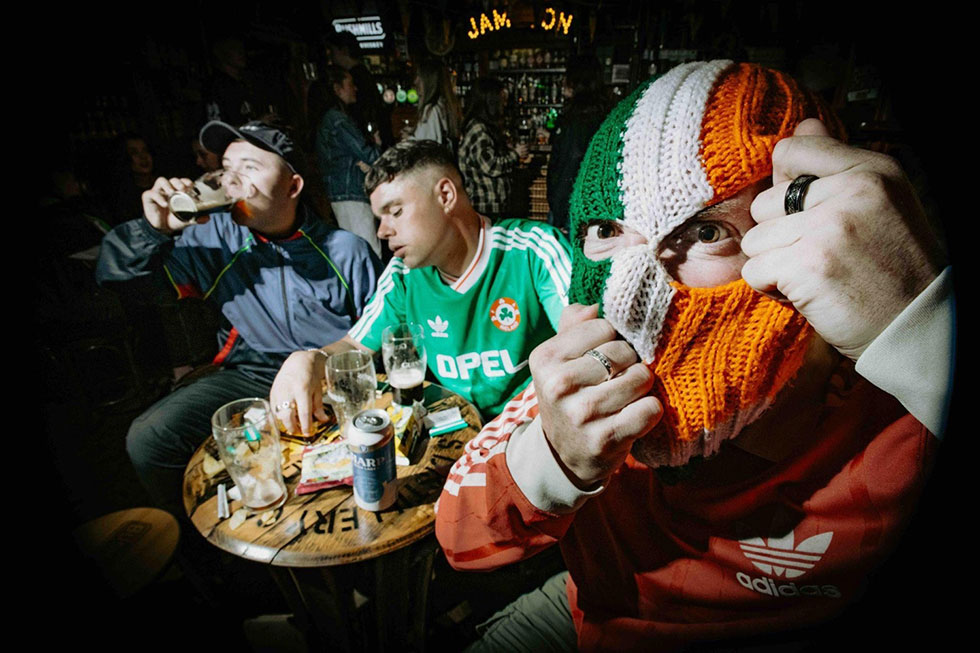
政治に突っ込んでいくのだって、その先に楽しいことが待ってるって期待してるからなわけじゃん。あるいは戦いに勝利して祝福しようって気持ちがあるからなわけじゃん。パーティもライヴで自由になるのも生きるために必要不可欠なもんなんでね。(モ・カラ)
アイルランド語なり少数言語で歌うことの何がいいって、本質的に反資本主義的であるってことで、金儲けのためじゃなくてコミュニティのために存在してるってとこだよ。(モウグリ・バップ)
■以前もおっしゃっていましたが、ベルファストでもアイルランド語を話してる人口はそんなに多くないですよね。音楽という形を介すことでアイルランド語を完全に理解していなくても、その言語と繋がると思いますか。
モウグリ・バップ:とはいえ、流暢でなくてもいくつかの単語は知ってたりしるし、うちのライヴに来て一緒に歌ってアイルランドも十分堪能してもらえるんじゃないかな。流暢じゃなくても、その言葉を楽しむことはできるんだから。あともうひとつ重要なこととして、少数言語を話す環境に育った子どもって、まわりでその言語が使われてないと、その言語には価値がない、あるいは社会的に重要じゃないって自然と思い込まされるようになるんだよね。だから、俺らの映画が映画館で上映されたりラジオで曲がかかったりすることで、それまでアイルランド語に付随してた恥の部分が払拭されて、自分たちの言語でありアイデンティティに誇りが持てるように。 実際、うちのライヴに来る客のほとんどはアイルランド語を話せないけど、それでも十分楽しんでるしアイルランド語で一緒に歌って大満足してる。
モ・カラ:そりゃまあ、自分らの場合はラッキーだったっていうか、アイルランド語の学校に通わせてもらう機会に恵まれてたんで。というのも、自分たちの前の世代が国から支援もないなかでゼロから築き上げてくれたものなわけで。いまではみんな普通にウチのライヴに来て、たんに学校で勉強する科目とは別の形でアイルランド語に慣れ親しむことができる。それこそ自分たちの一世代、二世代前の世代にとってたんに学校で習うだけでそれ、それ以外で使う機会もなかったのが、いまではライヴだの映画だの学校の外でも楽しめるものになってる。
■1950年代のロックンロールの誕生以来、全世界においてポップ・ミュージックも英語の曲中心でしたよね。いまの英語が母語のリスナーは、自分たちが理解できない言語の音楽も以前よりもオープンに楽しめるようになってると思いますか?
モ・カラ:いや、確実にそれはあるでしょ。いまって、みんな何かしら新しいものを求めている時代で、前例のないものだったり、これまでとは違うものを自分から探しに行くようになってる。60年代の人間に自分の知らない外国語の音楽って言っても、なかなかピンと来なかっただろうけど、いまではみんな普通に言葉なんて関係なしに音楽を聴いてる。
モウグリ・バップ:結局、英語が長いあいだ公共の電波を支配してきたのだって、昔は音楽を発表する機会が大手のラジオだのテレビだの一つ二つのメディアに絞られていたからであって。それがいまではインターネットのおかげで、フランス語だのバスク語だのカタルーニャ語だの、ありとあらゆる言語の音楽にアクセスできるようになってる。いま、うちの相方が言ってたように、いまはもっと実のある音楽が求められてる時代になってるんだろうね。
■以前のように世界のポップ・カルチャーをアメリカが支配しているという構造が崩れかけてるのもあるんじゃないでしょうかね。
モ・カラ:まさに!
モウグリ・バップ:それってアメリカで植民地の支配者の銅像が撤去されていったのと同じ動きだよね。植民地とか、主要もしくは多数派言語による支配が徐々に綻びを見せてる証拠だよね。しかもいまではインターネットのおかげで、人びとが自分で聴きたい音楽を自分で選ぶ権利を取り戻してる。アイルランド語なり少数言語で歌うことの何がいいって、本質的に反資本主義的であるってことで、金儲けのためじゃなくてコミュニティのために存在してるってとこだよ。
モ・カラ:過去の歴史からも帝国が崇拝対象となるシステムになってたわけで、アートもそれに倣うような形になってたわけで。英語で歌われてきたのなんてまさにその最たる例だし。でもいまはわざわざ学校で勉強するまでもなく、誰でもインターネットにアクセスして、諸外国の歴史について知ることができるし、かつての帝国がどれだけ世界に害悪をもたらしてきたかもはや周知の事実になってるわけさ(笑)。結果として、先住民族の言語や少数民族のカルチャーが再び注目されるようになってる。
モウグリ・バップ:いま言ったのって、インターネットがもたらした最大限にポジティヴな面の一例だよね。そりゃまあ、アメリカや中東の帝国主義者の連中はフェイク・ニュースを拡散するためにインターネットを利用してるっていう側面があるとはいえ。
※このあとふたりの舌鋒はまだまだ続きます。後編は2月下旬発売予定の『別冊ele-king 音楽は世界を変える』に掲載。ぜひそちらもチェックを。
2025.11.19 ON SALE
今最もエキサイティングで重要なアーティストの一人、アイルランド出身のラップ・トリオ、ニーキャップ。トドラ・Tのプロデュースによるデビュー・アルバム『ファイン・アート』にボーナス・ディスク(シングル「サヨナラ」と「リキャップ」を収録)を追加した来日記念盤、リリース【2CD】
【来日公演決定!】
★rockinʼon sonic
2026年1⽉4⽇(⽇)幕張メッセ国際展⽰場
https://rockinonsonic.com/
★単独公演
2026年1月5日(月)EXシアター六本木
https://www.creativeman.co.jp/
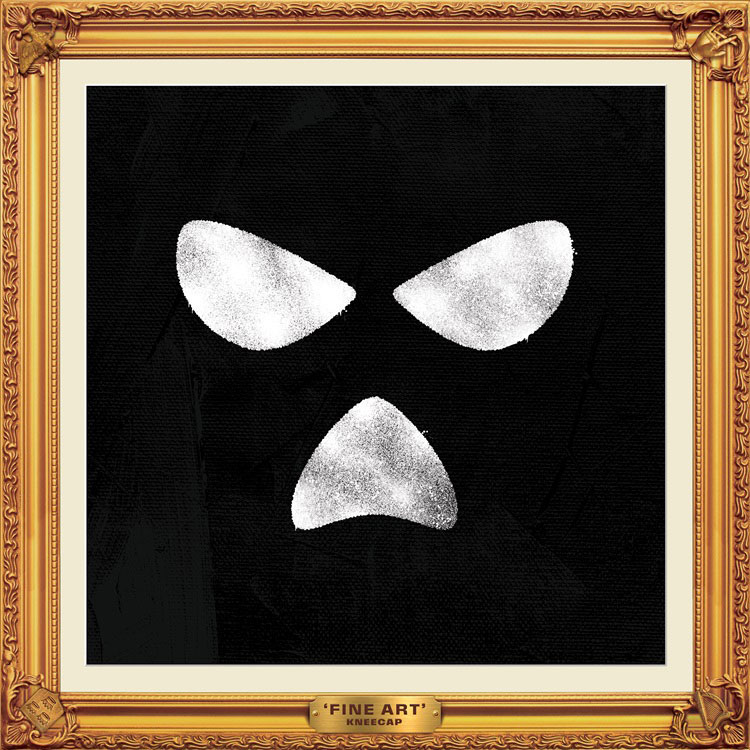
■アーティスト:KNEECAP(ニーキャップ)
■タイトル:FINE ART(ファイン・アート(2CD来日記念盤))
■品番:HVNLP225CDJX[CD/国内流通仕様]※帯付で解説他はつきません。
■定価:¥2,900 +税
■発売元:ビッグ・ナッシング/ウルトラ・ヴァイヴ
■収録曲目:
01. 3CAG (ft. Radie Peat)
02. Fine Art
03. I bhFiacha Linne
04. I’m Flush
05. Better Way To Live (ft. Grian Chatten)
06. Sick In The Head
07. Love Making
08. Drug Dealin Pagans
09. Harrow Road (ft. Jelani Blackman)
10. Parful
11. Rhino Ket
12. Way Too Much
(Bonus Disc)
01. Sayōnara
02. THE RECAP (ft. MOZEY)
今最もエキサイティングで重要なアーティストの一人、アイルランド出身のラップ・トリオ、KNEECAPは、デビュー・アルバム『Fine Art』を2024年6月にHeavenly Recordingsからリリースした。Toddla Tがプロデュースした12曲入りのこのアルバムは、アイルランド語と英語、風刺と社会意識の高い歌詞がシームレスに融合しており、激しく知的で、一貫して浮かれて騒がしく、真に示唆に富んでいる。そこには、アイルランド北部のあまりにも恵まれない地域からの叫びがあり、あまりにも無視されがちな言葉で彼らは語りかけてくる。アルバムは、高い評価を獲得。Hot Press(2位)、The Skinny(4位)、The Sunday Times(5位)、The Telegraph(10位)など、各メディアは同年の年間ベスト・アルバムの1枚に同作を選出。また、2025年のコーチェラ・フェスティバルでのパフォーマンスも大きな話題を呼んだ。一方、KNEECAPの半自伝的映画『KNEECAP/ニーキャップ』(原題:KNEECAP)も公開。地元アイルランドではアイルランド語映画として初週動員歴代1位の大ヒットを記録。さらに、第40回サンダンス映画祭では観客賞(NEXT部門)を受賞、第97回アカデミー賞国際長編映画賞にアイルランド代表としてショートリストに選ばれるなど、25の受賞と63のノミネートを果たした。そして、2025年8月より、同映画の日本公開もスタートした。
■ジャパン・オフィシャル・サイト:https://bignothing.net/kneecap.html
【来日公演決定!】
★rockinʼon sonic
2026 年1月4日(日)幕張メッセ国際展示場
https://rockinonsonic.com/
開場 12:00 /開演 13:30
1日券¥19,500
★単独公演
2026年1月5日(月)EXシアター六本木
https://www.creativeman.co.jp/
開場 18:00 /開演 19:00
スタンディング¥8,800 指定席¥9,800 ※税込/未就学児入場不可/別途1ドリンクオーダー
English version
interviewed by Ian F. Martin
When it comes to politics, language is both a battleground and a courtroom. It makes lawyers of us all, arguing over the finest differences in meanings between words, and it makes soldiers of us too, honing these differences down into blades. Nowhere is that more true than in the politics of Belfast. Geographically part of Ireland, ruled as part of the United Kingdom, and culturally split down the middle along political and religious grounds.
Formed by rappers Móglaí Bap and Mo Chara, along with DJ Próvaí, Belfast-based band Kneecap’s work is dense with the language, both verbal and visual, of the Irish political landscape. DJ Próvaí’s name and Irish tricolour flag balaclava are both references to the republican paramilitary group the IRA. The group’s name refers to a notorious form of torture and punishment carried out by such groups. It’s a provocation, for sure, but marrying this language to the sort of raucous party atmosphere of their shows is also a way of putting the edge of fear and danger it implies behind them and open up a shared space for young fans from both sides of the sectarian divide — especially those who grew up in the years after the 1998 peace agreement.
That said, the group are staunch republicans, writing in the Irish language and fiercely and vocally opposed to British rule over their corner of Ireland. They are proudly working class and retain a deep loathing for Conservative former Prime Minister Margaret Thatcher, which has endeared them to left-leaning listeners both at home and in Britain (I’ll admit, myself included). They have also been vocal supporters of Palestine and attracted condemnation and ongoing legal attacks from the government of British prime minister Keir Starmer, who have used anti-terrorism laws to (thus far unsuccessfully) prosecute Mo Chara on accusations of promoting Hamas.
Seen only through the lens of the media and political establishment, Kneecap come across as irresponsible, insensitive and dangerous. Their self-titled movie, which stars the group themselves in a fictionalised, often allegorical version of their origin story, was an opportunity for the group to frame their story in their own way, and in its explicit focus on language as a multilayered vehicle for politics on both a national level and in daily life, presented a powerful, funny and nuanced counter-narrative to the story the politicians and tabloid newspapers were telling, as well as a depiction of Belfast life that subverts many of the Troubles-era stereotypes of the city.
I spoke to Móglaí Bap and Mo Chara via video about how language in all its specificities and nuances is at work at the core of not just their lyrics but their identities, their everyday lives, and the politics that run through it all.
■When you make music, you’re also creating a space or an environment for the listeners, especially when you think of the live performance. What kind of space are you trying to create?
Móglaí Bap (MB): A big part of Kneecap is creating this environment of reality where the Irish language is central, especially as it’s not a language that’s heard a lot on the mainstream radio. So we’re trying to create an environment where people can connect with the language through the music. They can identify with the language. And it’s not something that’s been done, really, in contemporary hip hop music in Ireland.
Mo Chara (MC): There’s also something to be said about our gigs that we have such a mix. There’s a mix of all genders. I think a lot of hip hop gigs in Europe, in England, in Ireland, it’s very male-dominated. And I think the difference with Kneecap is that we have a cultural aspect to it as well, with language and identity to it, so people relate to that. We always have a mix of genders. We have very high energy gigs, there’s always moshpits, but everyone’s moshing together, all genders, no one’s trying to injure each other. It’s a very safe space for everyone. Organised chaos for everybody who wants to be involved.
■Watching videos of your live performances, the moshpit seems to have a central place in the show. Is there something special about the moshpit? Because you seem to put a lot of energy into that part of the show — organising, or taking a lot of care to make sure everybody’s safe.
MC: Maybe too much energy sometimes! But I think it took on a life of its own, the moshpits that we do, because everyone is expecting hig energy, and what happens is the crowd… we can rile them up pretty easily, but the crowd have heard about all the moshpits and so they come in and do it themselves. The thing is there’s something very freeing about it. When you’re part of a moshpit, you’re part of a collective, you’re part of a greater thing rather than just an individual at a show — you’re part of a show then. When there’s a moshpit happening, the audience are putting on a show for us. It’s kind of transactional: we entertain them, they entertain us back.
MB: It creates a sense of excitement at the gig, and also a sense of solidarity between people because you have to rely on each other to keep each other safe and have a good time. So I think that’s why it’s kind of central to our gigs, because that’s what people get from our gigs: a sense of solidarity.
■Which I guess feeds into the political aspects of what you do: the sense of solidarity and everyone being in it together.
MB: Exactly.
MC: In certain scenarios, politics is just as important as partying. I mean what’s the point of chasing political memes unless you’re going to be able to enjoy yourself at the same time, or enjoy yourself after the fight’s done? So partying and the freedom that comes with gigs are just as important a part of life.
■You can’t spell “Communist Party” without “party”!
MC: Exactly!
MB: Hahaha!
MC: He loves that one!
■You’ve mentioned in the past about how, even in Belfast, there’s not a lot of Irish speakers, so is there a way in which, by delivering it through music, that gives people a way to connect with it even without fully understanding all of it?
MB: One aspect of it is that people who don’t speak Irish but they speak a few words, they can come to the gig and they can sing along and get that sense of fulfilment, that you don’t have to be fluent to enjoy the language. And another aspect of it is that, when you speak a minority language growing up as a kid, if it’s not heard, you feel like it’s not worthy or that society values it. So the fact that our movie was in the cinemas and our songs are on the radio, it gets rid of that shame and gives them self esteem towards their language and identity. Most people don’t speak Irish at our gigs, so the fact that they can come along, enjoy the gig and sing along in Irish, there’s a sense of fulfilment there.
MC: Obviously we were lucky enough that we had the opportunities to go to school in Irish because of the generations that came before us who had built that stuff up from scratch with no help from the state. And now people can come to our shows and it’s not just a school subject the way it was for the generation or two before us, where they were just learning it in school and they didn’t have any services or anywhere to go to enjoy it socially. Now people can go to a show or see a movie and it’s just about taking it outside of the classroom.
■Since the birth of rock’n’roll in the 50s, pop music worldwide has been dominated by the English language. Do you think English speaking audiences nowadays are becoming more open to enjoying music in languages they don’t speak?
MC: Definitely. I think we’re at a time in history now where we’re seeking something different. Everybody’s seeking something new, that hasn’t been done, or branching out in some way. If you tried to explain to somebody in the 60s that you’re listening to music in a language you don7t understand, it’s probably alien to them, but now it’s become the norm.
MB: The reason that English has dominated the airwaves for so long is because there was only one or two avenues for getting your music out there through mainstream radio or TV or whatever, but now you have the internet, and there’s people singing in French or languages you’ve never even heard, Basque languages or Catalan or whatever, so now we have access to all this music and I think, as he was saying, people are looking for something with a bit more substance these days.
■I wonder as well if part of it’s also this sort of slow collapse of the United States as the centre of global pop culture.
MC: Yes!
MB: I think it’s kind of reflected in, you know when they were taking down the statues in America of the former colonialists. I think that’s part of this slow degeneration of this idea of colonies, of mainstream languages, of majority languages. And with the internet, we can take back control of the avenues of listening to music. And a good thing about singing in Irish or any minority language is that it’s anti-capitalist at its core because it’s not there for profit, it’s there for the sake of community.
MC: If you go back, empires have always been looked up to, and obviously art kind of imitated that, obviously with music always being in the English language and stuff, but now you don’t have to be in a classroom to learn a certain subject, anyone can get on the internet and listen to someone talk about some historical event that happened in another country, we’ve all kind of realised that empires have (laughs) been a kind of bad thing for the world, so people are looking more towards indigenous languages and more towards minority culture again.
MB: I think that’s the most positive aspect of the internet, because of course we have imperialists in America and the Middle East, etcetera, using the internet as a means of spreading fake news.
取材・文:イアン・F・マーティン(2025年12月31日)


Profile
 Ian F. Martin
Author of Quit Your Band! Musical Notes from the Japanese Underground(邦題:バンドやめようぜ!). Born in the UK and now lives in Tokyo where he works as a writer and runs Call And Response Records (callandresponse.tictail.com).
INTERVIEWS
- interview with bar italia - バー・イタリア、最新作の背景と来日公演への意気込みを語る
- interview with Kneecap (Mo Chara and Móglaí Bap) - パーティも政治も生きるのに必要不可欠 ──ニーキャップ、来日直前インタヴュー
- interview with Chip Wickham - スピリチュアル・ジャズはこうして更新されていく ――チップ・ウィッカム、インタヴュー
- interview with NIIA - 今宵は、“ジャンル横断”ジャズ・シンガーをどうぞ ──ナイア、インタヴュー
- interview with LIG (Osamu Sato + Tomohiko Gondo) - 至福のトリップ体験 ──LIG(佐藤理+ゴンドウトモヒコ)、インタヴュー
- interview with Kensho Omori - 大森健生監督、『Ryuichi Sakamoto: Diaries』を語る
- interview with Lucrecia Dalt - 極上のラテン幻想奇歌集 ——ルクレシア・ダルト、インタヴュー
- interview with Ami Taf Ra - 非西洋へと広がるスピリチュアル・ジャズ ──アミ・タフ・ラ、インタヴュー
- interview with Jacques Greene & Nosaj Thing (Verses GT) - ヴァーシーズGT──ジャック・グリーンとノサッジ・シングが組んだ話題のプロジェクト
- interview with Kassa Overall - ヒップホップをジャズでカヴァーする ──カッサ・オーヴァーオール、インタヴュー
- interview with Mat Schulz & Gosia Płysa - 実験音楽とエレクトロニック・ミュージックの祭典、創始者たちがその歴史と〈Unsound Osaka〉への思いを語る
- interview with Colin Newman/Malka Spigel - 夏休み特別企画 コリン・ニューマンとマルカ・シュピーゲル、過去と現在を語る
- interview with Meitei - 温泉をテーマにアンビエントをつくる ──冥丁、最新作を語る
- interview with The Cosmic Tones Research Trio - アンビエントな、瞑想的ジャズはいかがでしょう ——ザ・コズミック・トーンズ・リサーチ・トリオ
- interview with Louis and Ozzy Osbourne - 追悼:特別掲載「オジー・オズボーン、テクノを語る」
- interview with LEO - 箏とエレクトロニック・ミュージックを融合する ――LEO、インタヴュー
- interview for 『Eno』 (by Gary Hustwit) - ブライアン・イーノのドキュメンタリー映画『Eno』を制作した監督へのインタヴュー
- interview with GoGo Penguin - ジャズの枠組みに収まらない3人組、これまでのイメージを覆す最新作 ――ゴーゴー・ペンギン、インタヴュー
- interview with Rafael Toral - いま、美しさを取り戻すとき ——ラファエル・トラル、来日直前インタヴュー
- interview with caroline - いま、これほどロマンティックに聞こえる音楽はほかにない ——キャロライン、インタヴュー